The Republic of BURUNDI
The Heart of Africa.
A land of milk and honey where vibrant culture, rich traditions, and warm hospitality await you.
Geographical and Administrative Overview
Burundi is a country straddling Central and East Africa. It is surrounded by the United Republic of Tanzania to the east and south, the Democratic Republic of Congo to the west and Rwanda to the north. It is landlocked but has a large shore on Lake Tanganyika. Since February 4, 2019, Gitega has been designated as the political capital, while Bujumbura has become the economic capital.
With a population of around 12 million spread over an area of 27,834 km², Burundi is one of the most densely populated countries in Africa.
However, despite its small size and isolation, the country has been able to take advantage of this intermediate situation between Central and East Africa, between English-speaking and French-speaking Africa, in terms of economic, human or cultural exchanges as well as in the geopolitical balance.
Geographical and Administrative Overview
The relief of Burundi is extremely varied. The country is subdivided into 5 eco-climatic regions. From West to East, there are: i) the lowlands of the Imbo region corresponding to a collapsed ditch in the Western Rift Valley, ii) the steep region of Mumirwa, iii) the mountainous area ( Congo-Nile Crest), iv) the central plateaus and v) the Kumoso and Bugesera depressions. The altitude varies between 774 m on the shore of Lake Tanganyika and 2,670 m on the mountain ranges, gradually decreasing to 1,200 m in the east of the country.
The topography of Burundi is accompanied by a variation in climate depending on the altitude, hence a significant geoclimatic diversity.
Burundi’s climate is humid tropical influenced by altitude. It is characterized by an alternation of the rainy season which generally extends from October to May and the dry season which runs from June to September. The average annual air temperature decreases as the altitude increases. The highest annual average is 24.1 ° C (Imbo plain) while the lowest is 15.6 ° C (Rwegura). Average monthly maximum temperatures are highest at the end of the dry season (September-October) while average monthly minimum temperatures are lowest during the dry season.
History and Culture
Historical Background
Burundi has a long and intricate past that goes back hundreds of years. Its history has been molded by its kingdoms, its time under colonial rule, and its fight to become independent. The Kingdom of Burundi came into being in the 1500s. It had a well-organized and centralized monarchy with the Mwami (king) at its head. The society of old was built around clans, and the king played a key part in bringing together the country’s different ethnic groups.
In the late 1800s, Burundi became a part of German East Africa. After World War I, the League of Nations gave Belgium control of Burundi and Rwanda. The time under colonial rule had a big impact on how Burundi’s society worked. It brought in European schooling, Christianity, and new ways of running things. These changes made the gaps between ethnic groups even wider. On July 1, 1962, Burundi got its freedom and turned into a republic, but kept its monarchy. The years after independence weren’t easy. The country went through times of shaky politics, fights between ethnic groups, and civil wars.
.
Post-Independence and Civil War
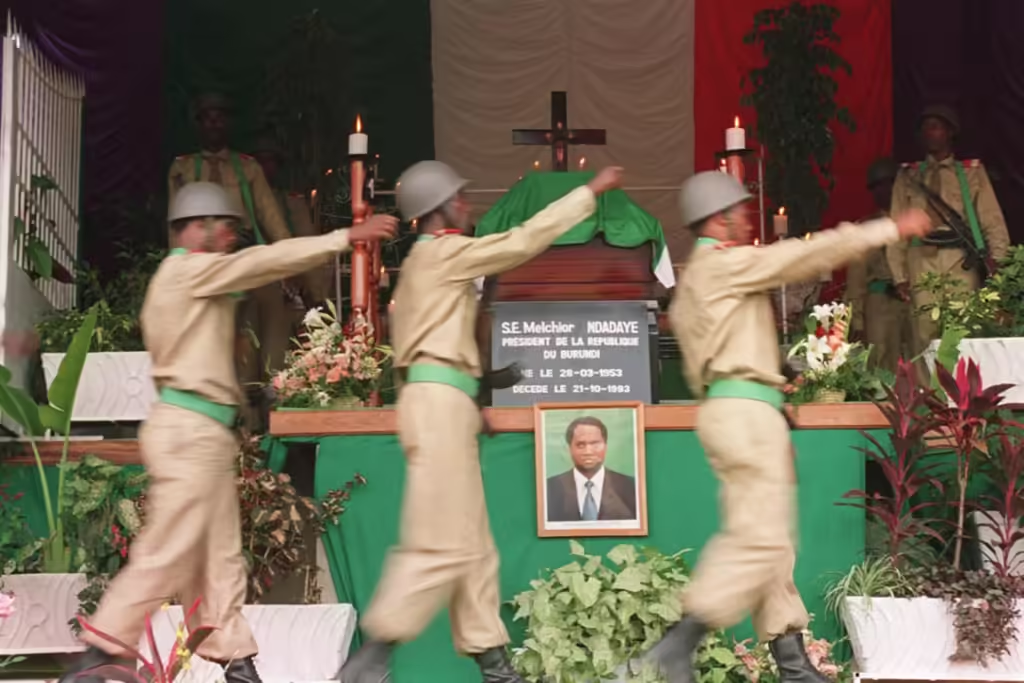
Burundi faced instability after gaining independence, with coups, killings, and ethnic clashes shaking the country. The government abolished the monarchy in 1966 turning Burundi into a republic. In the years that followed, tensions between Hutu and Tutsi groups sparked repeated violence, including bloodshed in 1972 and 1988. The murder of Melchior Ndadaye, Burundi’s first elected Hutu president, in 1993 set off a vicious civil war. This conflict raged for more than ten years resulting in many deaths and forcing countless people to flee their homes.
Peace Process and CNDD-FDD Victory
In the early 2000s, people worked harder to bring peace to the war-torn country. The Arusha Accords signed in 2000, created a plan for power-sharing and talks among different political and rebel groups. The CNDD-FDD (National Council for the Defense of Democracy–Forces for the Defense of Democracy), a major rebel group, had a big impact on these peace efforts. Under Pierre Nkurunziza’s leadership, the CNDD-FDD changed from a rebel group to a political party.
In 2005, Burundi adopted a new constitution after a national referendum. This constitution set up a power-sharing government and paved the way for democratic elections. That same year, the CNDD-FDD won most seats in the parliamentary elections. Parliament then elected Pierre Nkurunziza as President of Burundi. This event marked a key moment in the country’s history. His victory brought relative stability and allowed for the rebuilding of national institutions.
Traditional Customs and Social Life
Burundian culture is deeply rooted in tradition, with a strong emphasis on community, family, and respect for elders. Traditional customs are passed down through generations and play a central role in daily life. The extended family system remains vital, often involving communal living and shared responsibilities. Ceremonies such as weddings, initiations, and funerals are important social events that bring communities together, often accompanied by traditional music, dance, and food.
Languages
Kirundi stands as the official language and has the widest usage across the country bringing Burundians together. French also holds official status and plays a key role in government, schools, and commerce stemming from colonial times. English now taught more in schools, is gaining ground particularly in business and global dealings showing Burundi’s move to join the East African Community.Additionally, Swahili is spoken, especially in commerce and border regions, as it serves as a lingua franca in East Africa, further connecting Burundi to its regional neighbors.
Cultural Heritage and Arts
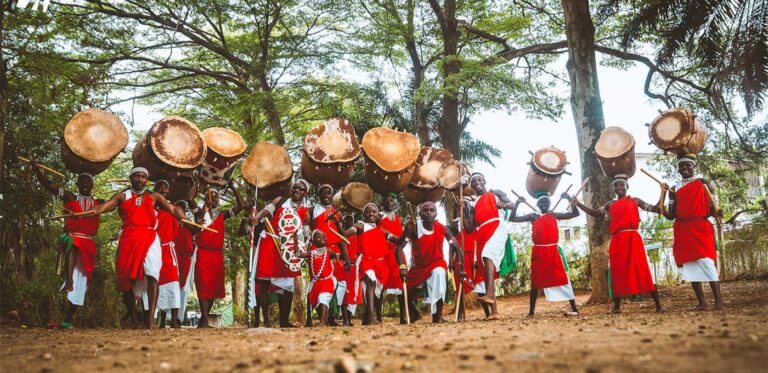
Burundi boasts a rich cultural heritage showcasing traditional music, dance, and crafts. The country takes pride in its Ingoma (drum) culture, which goes beyond mere art—it stands as a symbol of national unity and pride. The Royal Drummers of Burundi have gained worldwide fame playing ancient rhythms that trace back hundreds of years. Dance plays a key role in Burundian culture often narrating tales of heroism everyday life, and the link to nature.
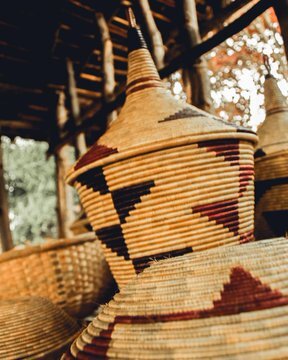
Craftsmanship plays a key role in Burundi’s culture. Local craftspeople make detailed baskets, pottery, and beadwork that show the country’s art history. People often use traditional Imigani (sayings) and Ibitito (poems) to share wisdom and cultural values in group meetings.
Religious and Spiritual Beliefs
Most people in Burundi are Christian, with Roman Catholicism being the main religion, followed by Protestantism.
Festivals and Celebrations
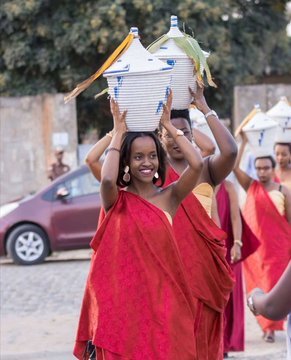
Festivals play a crucial role in Burundian life honoring everything from harvests to national holidays. Major events include Independence Day (July 1st) and Unity Day (February 5th), which feature parades cultural shows, and community get-togethers. People perform traditional dances like the Umuyebe and the Agasimbo during these festivities showcasing the energy of Burundian culture.
ECONOMY
Burundi’s economy is essentially a rural economy based on agriculture and livestock.
The agricultural sector employs 90% of the population and thus represents the big employer in the Burundian economy. However, it is the tertiary sector that contributes more to GDP. In its role as a hub, Bujumbura, the capital, stimulates the growth of large and small businesses.
In addition, in terms of business and investment climate, the Government of Burundi has undertaken bold reforms which have led to the improvement of its Doing Business ranking. At the Single Window for business creation, it is possible to create your company in less than 2 hours.
FOREIGN POLICY
As a member of the United Nations and the African Union, Burundi naturally adheres to the goals and founding principles of both of these Organizations as set out in their respective Charters. In addition to protecting its sovereignty, Burundi’s action is always guided by the concern for international peace and security, the promotion of human rights, friendly relations and international cooperation with a view to sustainable and equitable development.
Good Neighborliness and Regional Integration
In its vision of its relations with the other nations of the world, Burundi considers that peace, security, cooperation must start with its immediate neighbors. It is in this perspective that in 1976, only 14 years after its independence, Burundi joined forces with its neighbors from Rwanda and the Democratic Republic of Congo (Then Zaire ) to create the Economic Community of Land of the Great Lakes (CEPGL). According to the founding act of the Community, the Heads of State of the three countries had precisely the objectives of “consolidating the initiatives of peace, security and stability within the member countries;” ensuring the economic and social development of the three countries by intensifying trade and the free movement of people and goods and by “close” cooperation in the various fields of the national life of the three States.
Even though for several years this organization has experienced serious problems, mainly due to the many crises in the sub-region, the fact remains that its "raison d'être" remains valid.
On June 18, 2007, Burundi adhered to the Founding Treaty of the East African Community (EAC) of which it became a full member from July 1 of the same year. The other members are Kenya, Uganda, Rwanda, Tanzania and South Sudan. Incidentally, Burundi is also part of the Economic Community of Central African States (ECCAS) and the Common Market of Eastern and Southern Africa (COMESA). Created in December 1994 to replace the former ZEP (preferential trading area) which had existed since 1981, COMESA today unites 21 member states and has more than 540 million inhabitants.
As for ECCAS, it dates from October 1983 but its General Secretariat was not set up until January 1985. In addition to Burundi, the other member states are Cameroon, the Central African Republic, the Congo, Gabon, Equatorial Guinea, DR Congo, Rwanda, Sao Tome & Principe and Chad.
Burundi's Commitment to Peace and Security
Within the framework of the United Nations, Burundi contributes to peacekeeping operations with a little over a thousand personnel distributed mainly within MINUSCA in the Central African Republic and in MINUSMA in Mali. Finally, during the crises in Darfur, Côte d’Ivoire or Haiti, Burundi made its soldiers and police available to the United Nations in order to restore peace and security in those countries.
Capital
GITEGA
Currency
Burudian franc
Country Dialing Code
+257
Time Zone
UTC +02:00
Independence Day
July 1st 1962
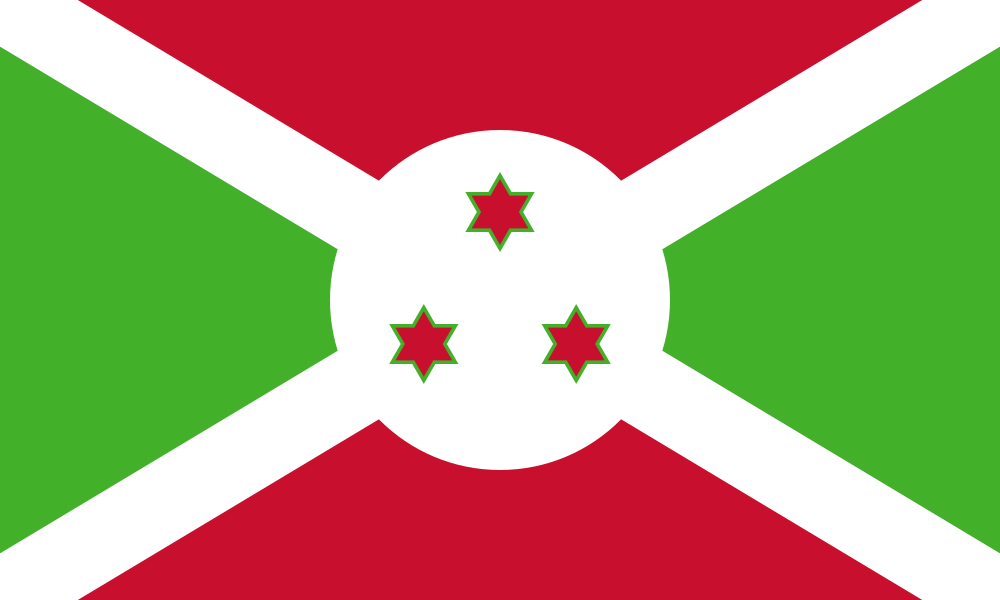
National Anthem
Burundi Bwacu
Area
27,834 km² (10,747 Sq mi)
Country Dialing Code
+257
Population
12,89 millions (2022)